





Eye For Film >> Movies >> Jaripeo (2026) Film Review


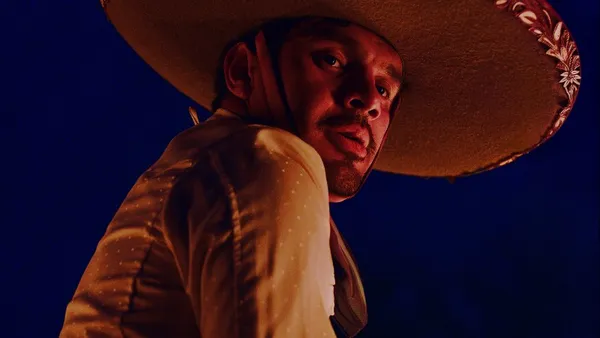

A persistent blind spot in contemporary queer discourse, especially as it is shaped by metropolitan cultural centres, is the assumption that queer life follows a single recognisable trajectory: self-discovery, self-assertion, estrangement if necessary, and eventual belonging elsewhere. But queer people also exist far beyond those urban enclaves, within communities where tradition, family, religion and local codes of masculinity still exert enormous force, and where leaving is neither simple nor always desirable. For many, the inability to live fully as oneself is not enough reason to sever ties with home. It is in that tension that Jaripeo locates its power.
Co-directed by Efraín Mojica and Rebecca Zweig, the documentary turns its attention to gay men within the culture of jaripeo, a form of rodeo deeply rooted in Latin American tradition and inseparable from long-standing ideals of machismo, ruggedness, and masculine performance. Rather than approaching that world from the outside, the film enters it with intimacy. Mojica is not only one of the directors but also a visible presence within the documentary, guiding us through the jaripeos of their home state of Michoacán in western Mexico and speaking with men whose lives unfold in negotiation with the culture around them.
What emerges is not a single portrait of gay identity but a range of ways of inhabiting queerness under pressure. The film’s subjects reveal how sexuality is lived differently depending on one’s tolerance for stigma, one’s relation to family, and one’s willingness or ability to embody or reject social expectations. Jaripeo touches on a number of tensions within this milieu: the preference some gay men express for masculinity in themselves and in their partners, the hostility directed toward femininity and flamboyance, the endurance required of those who cannot or will not make themselves more socially palatable, the possibility of maintaining religious faith without disavowing one’s sexuality, and the practical realities of making a living as a drag performer. The documentary is attentive to contradiction without flattening its subjects into symbols.
One of the film’s most valuable qualities is the queer gaze it brings to a space so often coded as emphatically heterosexual. Machismo has always contained an undercurrent of performance, display, and bodily ritual, and Jaripeo is sharp enough to recognise the homoerotic charge embedded within it. Through its handheld camerawork and grainy Super 8 textures, the film reframes this culture not as an inaccessible fortress of masculinity but as something already porous, already haunted by the desires it tries to discipline.
Still, for all its insight, Jaripeo can remain frustratingly out of reach. Some interviews are too brief to allow for deeper emotional investment, while certain stylised and dreamlike passages feel more decorative than illuminating. At times, the documentary gestures toward profundity where greater substance was needed. Even so, its achievement is real. Jaripeo gives visibility to queer rancheros too rarely acknowledged on screen and honours the fragile, often compromised ways they navigate family, faith, desire, and belonging. It is a film of delicate observation, one that understands that survival within a hostile structure can itself be a complicated kind of courage.
Reviewed on: 07 Mar 2026


